Hard shell vs soft shell rooftop tents: a buyer’s guide for importers
How hard shell and soft shell rooftop tents differ in weight, set-up time, space, durability and landed cost — and how to split an import order between them.
The short answer
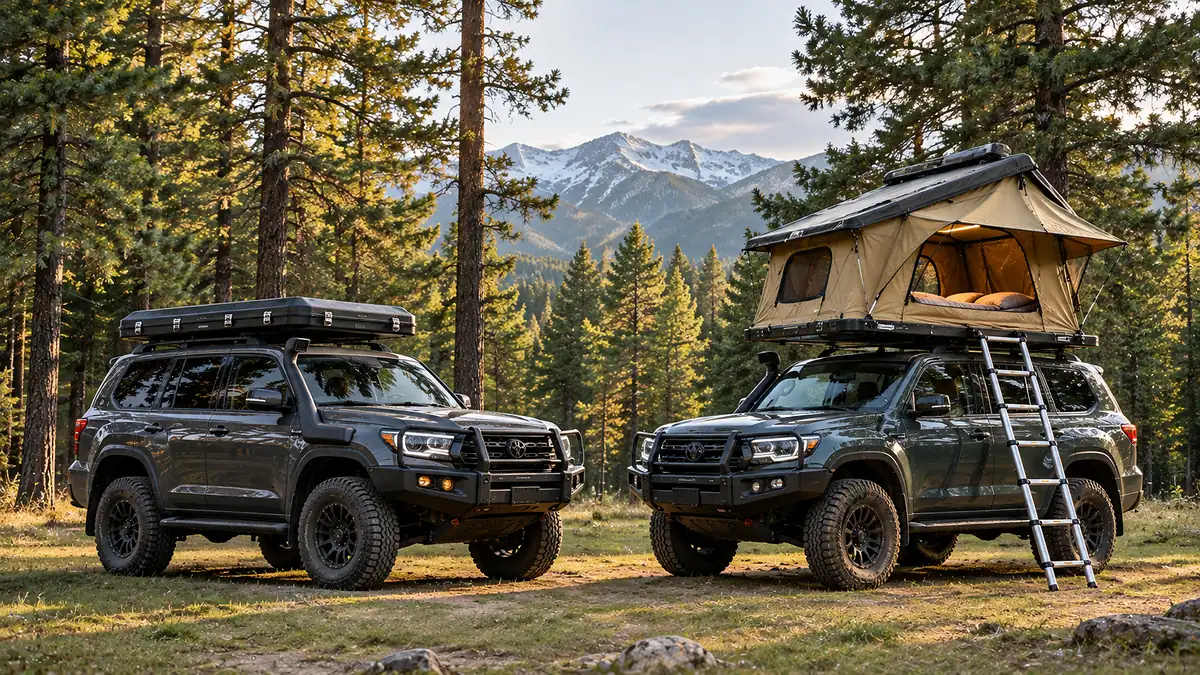
A hard shell rooftop tent has a rigid lid — aluminum, honeycomb panel or ABS — that lifts on gas struts. A soft shell rooftop tent has a fabric body that folds out over the side or rear of the vehicle on aluminum poles and is protected by a PVC travel cover when closed.
Neither is “better”. They sell to different customers, and a strong range usually includes both.
Side-by-side comparison
| Factor | Hard shell | Soft shell (fold-out) |
|---|---|---|
| Set-up time | About 1 minute, release latches and lift | 3–5 minutes, remove cover, unfold, set ladder |
| Sleeping area | Equal to base footprint | Roughly double the base footprint |
| Closed height | From around 12 cm on low-profile wedge models | Usually 30 cm or more with cover |
| Annex room | Limited options | Standard on most models |
| Wind noise and drag | Lower | Higher |
| Typical buyer | Rental fleets, premium dealers, frequent travellers | Families, first-time overlanders, budget-led markets |
Weight and roof load
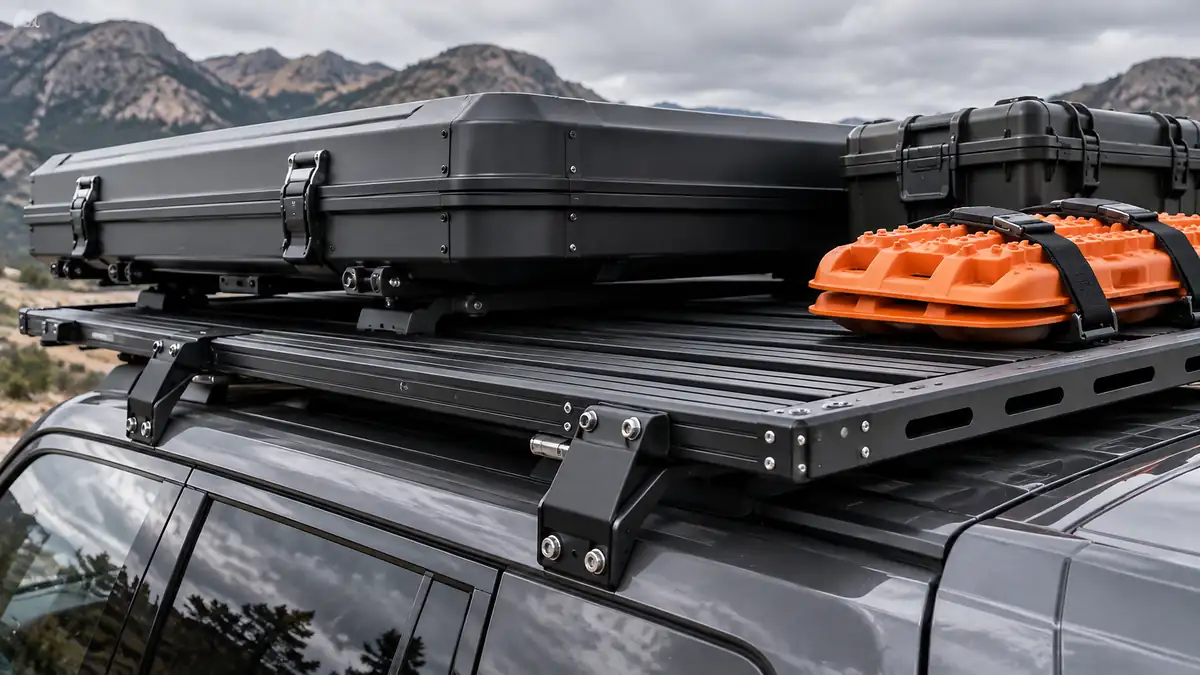
Weight drives two things: whether the tent fits within the vehicle’s dynamic roof load and how much freight you pay per unit. Thin aluminum and honeycomb wedges are now competitive with soft shells on weight, while ABS shells and large clamshells weigh more. Always check the dynamic rating of the vehicle and rack together — we explain this in detail in our roof rack load guide.
Durability and after-sales
Hard shells protect the canvas from UV, dust and road grime while driving, so fabric lasts longer and warranty claims on zips and seams are lower. Soft shells depend on the PVC cover; a well-designed cover with welded seams and a heavy zip is the single biggest factor in soft shell longevity.
Hinges, gas struts and latches are the wear parts on hard shells. Ask your supplier for spare-part kits in the first order so dealers can service customers locally.
Space and annex rooms
If your customers camp with children or for long stays, soft shells win: a 140 cm base unfolds to a 280 cm sleeping area, and an annex room underneath adds a changing room or a second bed. Side-opening and extended wedge hard shells close some of that gap, but at a higher price.
Landed cost and container loading
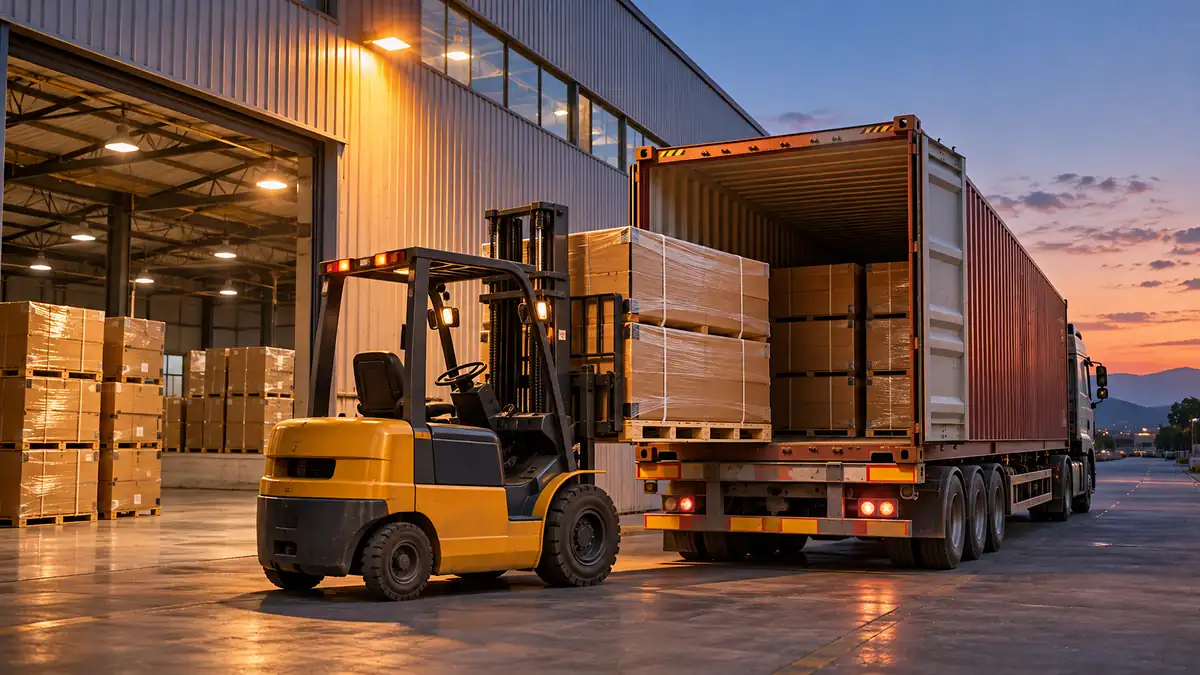
Hard shells are flatter when packed but are often heavier and more valuable per carton, so duty and insurance matter more. Soft shells are bulkier per unit. When planning a mixed container, ask the factory for carton dimensions and gross weight of each model and calculate units per 40HQ before you set retail prices.
How to split a first order
- Start from your dealers’ current customers, not from the product.
- Choose one hero hard shell (for example a slim aluminum wedge) and one hero soft shell in two widths.
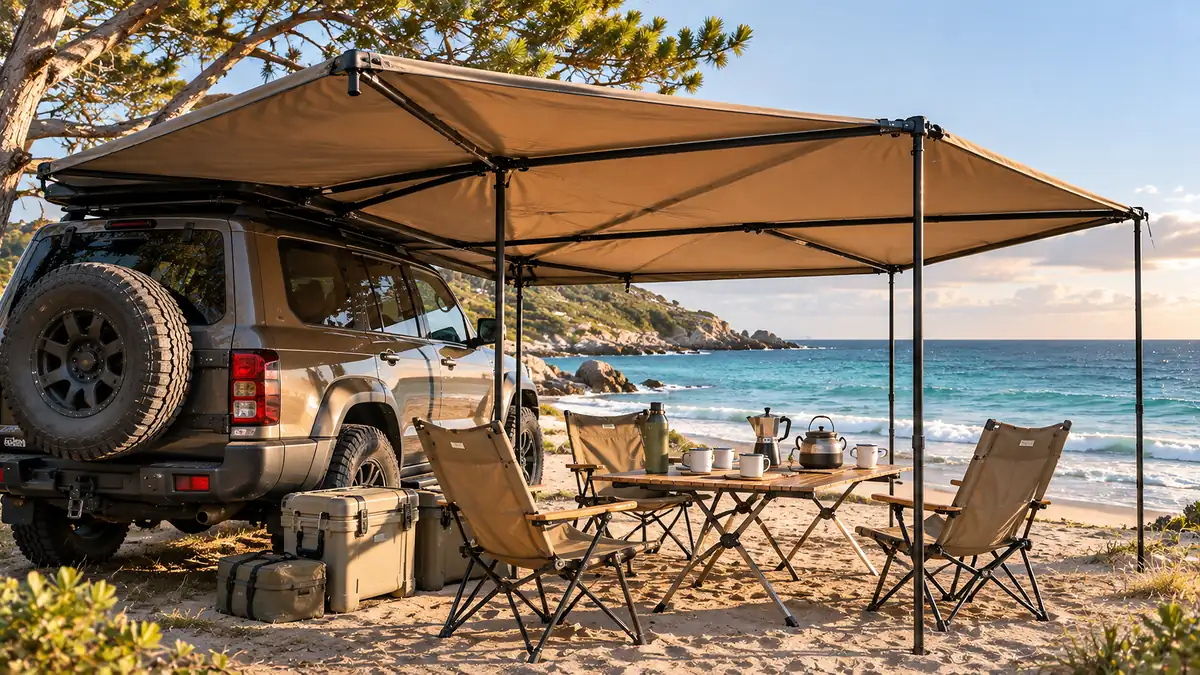
- Add the accessories that lift basket value: awnings, annex rooms and mattresses.
- Approve a pre-production sample of each with your logo before bulk production.
Key takeaways
- Hard shell: speed, aerodynamics and premium positioning.
- Soft shell: space, annex options and accessible pricing.
- Check dynamic roof load and freight cost per unit before choosing.
- A balanced range with shared accessories is easier for dealers to sell.
Frequently asked questions
Is a hard shell rooftop tent worth the extra cost?
For customers who move camp often, it usually is: set-up takes about a minute and the closed tent is quieter and more aerodynamic. For customers who stay in one place and need space, a soft shell with an annex gives more value.
Do hard shell rooftop tents fit every roof rack?
They fit most cross bars and flat platforms with standard mounting channels, but the vehicle’s dynamic roof load and the bar spread must be checked for each model.
Which sells better in Australia and North America?
Both segments are mature in these markets. Hard shells dominate premium and rental channels, while fold-out soft shells remain strong with families and entry-level buyers.
Get prices, MOQ and lead times from the factory.
Request a quote